Supplement Ad Compliance: FDA and FTC Rules for AI-Generated Creative
Quick Answer
Supplement ads must follow DSHEA rules: structure/function claims are allowed ('supports healthy sleep') but disease claims are not ('cures insomnia'). AI-generated ads face the same rules as traditional ads, plus additional scrutiny around AI doctor personas making health claims. The FTC requires testimonials to reflect typical results, and all claims need competent and reliable scientific evidence.
Supplement advertising compliance is not optional. It is the single highest-risk area in your ad operation, and AI-generated creative introduces new compliance questions that most brands are not prepared for.
The good news: AI actually makes compliance easier in most cases because every word is scripted and controllable. No creator ad-libbing disease claims. No off-script testimonials making promises you cannot support.
The bad news: AI introduces new gray areas, especially around doctor and expert personas making health claims. And the regulatory agencies have started paying attention to AI-generated health content.
This guide covers the rules you need to know, the most common violations we see in supplement ads, and specific guidance for AI-generated creative.
The Regulatory Framework: Who Enforces What
Two federal agencies primarily regulate supplement advertising, and they cover different aspects.
The FDA (Food and Drug Administration) regulates product labeling and claims made about the supplement itself. Under DSHEA (Dietary Supplement Health and Education Act of 1994), supplements are regulated differently from drugs. This creates both opportunities and constraints for advertisers.
The FTC (Federal Trade Commission) regulates advertising claims and marketing practices. If the FDA focuses on what your product label says, the FTC focuses on what your ads say. Any claim in your advertising, whether on Meta, Google, email, or your website, falls under FTC jurisdiction.
Meta also has its own advertising policies that layer on top of federal regulations. Meta’s health and wellness advertising guidelines are stricter in some areas than federal law, particularly around targeting and claim language.
Structure/Function Claims vs Disease Claims
This distinction is the foundation of supplement advertising compliance. Getting it wrong is the most common reason supplement ads get flagged.
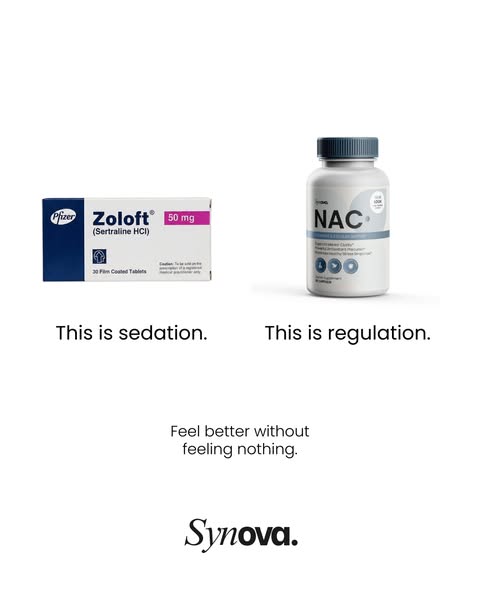
Structure/function claims describe how an ingredient affects the body’s structure or function. These are generally allowed for supplements. Examples: “supports healthy sleep patterns,” “promotes joint flexibility,” “helps maintain normal blood sugar levels already within the normal range.”
Disease claims state or imply that a product can diagnose, treat, cure, or prevent a disease. These are NOT allowed for supplements. Examples: “cures insomnia,” “treats arthritis,” “prevents diabetes,” “reduces anxiety.”
The line between these two categories is sometimes obvious and sometimes frustratingly subtle.
“Supports calm mood” is a structure/function claim. Allowed.
“Reduces anxiety” is a disease claim because anxiety is a recognized medical condition. Not allowed.
“Promotes healthy cortisol levels” is a structure/function claim. Allowed.
“Lowers cortisol” moves into drug claim territory because it implies a measurable therapeutic effect. Risky.
The qualifying language matters enormously. Words like “supports,” “promotes,” “maintains,” and “helps” are generally safe when paired with normal body function descriptions. Words like “treats,” “cures,” “prevents,” “reduces,” and “eliminates” trigger disease claim concerns.
The AI Doctor Persona Trap
This is the compliance issue most specific to AI-generated supplement ads, and it is the one regulators are watching most closely.
Many AI ad tools offer “doctor” or “medical professional” avatars. These avatars wear lab coats, display stethoscopes, and present with clinical authority. For supplement ads, this creates a specific compliance risk.
When an AI-generated doctor persona makes claims about a supplement, the FTC considers this an implied expert endorsement. Under FTC guidelines, expert endorsements must reflect the genuine opinion of a qualified expert who has actually evaluated the product. An AI avatar cannot form a genuine opinion about anything.
The risk is real. The FTC has specifically flagged AI-generated testimonials and endorsements as an area of enforcement focus. Using an AI avatar that appears to be a medical professional endorsing your supplement creates legal exposure that did not exist with traditional advertising.
How to stay safe: If you use authority-format AI ads, make it clear that the content is educational rather than a personal endorsement. Script the content around ingredient research and general wellness information rather than “I recommend this product” language. And never have an AI doctor avatar say “I prescribe” or “my patients take” because that implies a real medical relationship.

Testimonial Rules That Apply to AI Content
The FTC’s Endorsement Guides were updated to specifically address AI-generated testimonials and reviews. Here is what you need to know.
Testimonials must reflect typical results. If you create an AI testimonial saying “I lost 30 pounds in two months,” the FTC requires that this reflects the typical experience of actual users. If your average customer loses 5 pounds, that AI testimonial is deceptive regardless of whether a real or AI person delivers it.
Material connections must be disclosed. If you are creating AI-generated content that appears to be from a real customer, that is a material connection that needs disclosure. The audience needs to know they are not watching an actual customer testimonial.
Fabricated reviews are illegal. The FTC’s rule on fake reviews, finalized in 2024, explicitly covers AI-generated reviews and testimonials. Creating AI content that pretends to be from real customers without disclosure violates federal law.
The practical solution: Use AI-generated content clearly as branded advertising rather than trying to pass it off as organic UGC. Position AI avatars as presenters delivering your message rather than as customers sharing their experience.
The Most Common Compliance Violations We See
After reviewing hundreds of supplement ads across Meta, these are the violations that appear most frequently. Every single one of these can trigger enforcement action.
Disease claims disguised as personal stories. “This cured my insomnia” is a disease claim whether a real person or AI avatar says it. Framing a disease claim as a testimonial does not make it compliant.
Before and after claims without substantiation. “I went from 200 pounds to 165 pounds using this supplement” requires competent scientific evidence that the product produces those results. Anecdotal before/after stories that represent atypical results are deceptive.
Implied clinical endorsements. Any format that suggests a medical professional is endorsing your supplement requires that a real, qualified expert has actually evaluated and endorsed the product.
Missing disclaimers. Every supplement ad should include “These statements have not been evaluated by the Food and Drug Administration. This product is not intended to diagnose, treat, cure, or prevent any disease.” This disclaimer is required on product labeling and should appear in advertising as well.
Ingredient claims without evidence. Saying “clinically proven to improve sleep by 40%” requires a clinical study on your specific product, not just the generic ingredient, showing that specific result. Studies on ingredient categories do not automatically apply to your formulation.
How AI Actually Improves Compliance
Despite the new challenges AI introduces, it also provides significant compliance advantages that most brands underappreciate.
Total script control. Every word in an AI-generated ad is predetermined. No creator will ad-lib a disease claim. No talent will misremember the approved talking points. The script you approve is exactly what the viewer sees.
Easy pre-production review. You can send the script to your compliance team or attorney before generating a single frame of video. Changes cost nothing because you have not produced anything yet. With human creators, compliance issues discovered after filming require expensive reshoots.
Consistent claim language. When you find compliant language that works for a specific ingredient, you can replicate it exactly across 50 ad variations. Every version uses the same approved claims with zero drift.
Version control. If a claim needs to be modified based on new regulatory guidance, you update the script and regenerate. No need to track down creators, pay for new filming, or manage the logistics of content replacement.
Platform-Specific Rules
Beyond federal regulations, Meta has its own advertising policies for health and wellness products that affect how you run supplement ads.
Personal health targeting restrictions. Meta does not allow targeting based on health conditions. You cannot target people who “have anxiety” or “suffer from insomnia.” Your targeting must be interest-based (yoga, meditation, wellness) rather than condition-based.
Claim review process. Meta’s automated review system flags health-related claims for additional review. Ads containing words like “cure,” “treat,” “clinically proven,” or disease names often get rejected automatically. The appeal process exists but is slow and inconsistent.
Landing page consistency. Meta requires that your ad claims match your landing page claims. If your ad makes a specific claim about an ingredient, your landing page needs to support that claim with the same language and evidence.
A Practical Compliance Checklist for AI Supplement Ads
Before launching any AI-generated supplement ad, run through these checks.
Check 1: Claim classification. Are all health claims in the script structure/function claims? Flag any language that could be interpreted as diagnosing, treating, curing, or preventing a disease.
Check 2: Evidence review. Does every claim have competent and reliable scientific evidence behind it? For ingredient-specific claims, do you have studies on that ingredient at the dose present in your product?
Check 3: Testimonial compliance. If the ad uses a testimonial format, does it reflect typical results? Is the AI-generated nature of the content appropriately disclosed?
Check 4: Authority figure review. If the ad uses a doctor or expert persona, does the content avoid implied personal endorsement? Is the focus educational rather than prescriptive?
Check 5: Disclaimer presence. Does the ad include or link to the required FDA disclaimer?
Check 6: Platform compliance. Does the ad comply with Meta’s health and wellness advertising policies? Check targeting, claim language, and landing page consistency.
Check 7: Ingredient specificity. Are claims made about your specific product rather than generic ingredients? If citing studies, do they apply to your formulation and dosage?
The Cost of Getting It Wrong
The consequences of compliance violations extend far beyond a rejected ad.
Ad account restrictions affect your entire advertising operation, not just the flagged ad. Meta may limit your delivery, increase costs, or shut down your account entirely.
FTC enforcement actions can result in fines, required corrective advertising, and consent orders that restrict your future marketing practices for years.
FDA warning letters are public documents that damage brand credibility and can trigger retailer pullbacks and distribution disruptions.
The most expensive compliance mistake is the one you do not catch before it scales. An AI-generated ad with a problematic claim can be duplicated across 50 variations and run for weeks before anyone notices. The automation that makes AI production efficient also makes compliance failures more scalable.
Why Specialized Partners Matter
Generic AI tools produce whatever script you feed them. They have no compliance layer, no ingredient knowledge, and no awareness of the regulatory landscape.
A supplement-specialized creative partner reviews every script for compliance before production begins. The compliance check is built into the workflow, not bolted on after the fact. This is not just a convenience. For brands spending significant money on Meta ads, it is risk management.
Want AI-generated supplement creative with compliance built into every script? See how APXlab handles compliance-aware creative production.